Last Updated: October 7, 2026
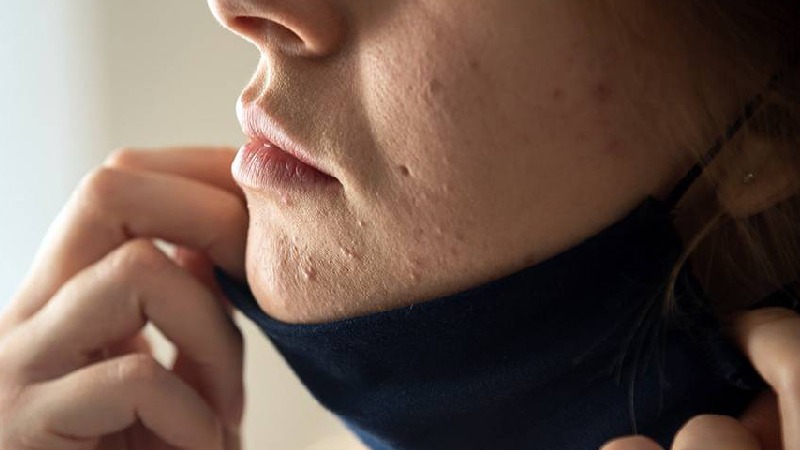
Avoid Getting ‘Mask – Prolonged use of face masks can cause “make”. Maskne refers to skin problems that occur when wearing face masks. Find out why masked acne occurs, how to prevent it, and what to do if it develops.
Acne Mechanica, better known as “mask,” refers to the rash wearing face masks. Acne is a common skin condition that arises when hair follicles beneath the skin become clogged with oil, dead skin, or bacteria. Pimples and blackheads can also form in areas covered by the face mask.
Aside from the conditions mentioned, wearing face masks can also cause other skin problems. Some people develop dry and cracked corners of the mouth known as “Cheilitis.” The skin around the mouth can similarly become dry and red, called “perioral dermatitis.” Hair follicles in areas covered by the mask can also become infected. This condition is called “folliculitis.”
Wearing a mask for several hours can create a combination of friction, heat, moisture, and pressure on the skin. These conditions may make existing skin concerns more noticeable or trigger new irritation. For people who already have sensitive skin, choosing comfortable masks and following a consistent skincare routine can help reduce unnecessary irritation.
This article belongs to the Healthy Lifestyle.
Table of Contents
What causes Mask?
The constant rubbing of the face mask on the skin makes the skin irritated and sensitive. Using masks traps warm, moist air underneath our covers, making it ideal for bacteria to grow and multiply. Additionally, too much humidity in the show can cause our skin barrier to break down, leading to more outbreaks of eczema and rosacea. Skin cells also cannot customarily be shed, leading to clogged pores.
All these factors caused by wearing face masks increase the chances of skin rashes.
Another important factor is friction. Every time the mask moves while talking, walking, exercising, or adjusting it, it can rub against the cheeks, nose, chin, and area around the mouth. Repeated friction can irritate the skin and make existing pimples more uncomfortable.
Sweat and oil can also build up underneath a mask. When these substances remain on the skin for an extended period, they can contribute to blocked pores. This is particularly noticeable during hot or humid weather when the skin naturally produces more sweat.
The material of the mask can also make a difference. Rough or poorly fitting materials may create additional friction, while a mask that is too tight can put continuous pressure on certain parts of the face. On the other hand, a mask that is too loose may move around frequently and increase rubbing.
Skincare and makeup products may also contribute to irritation. Heavy foundation, oily products, or strongly fragranced products can be uncomfortable under a mask, particularly when combined with heat and humidity. Keeping the skincare routine simple can therefore be useful when the skin is already irritated.
How to prevent masks?
If you can’t avoid wearing a mask, especially outdoors, here are some key prevention tips you can follow to help prevent act:
- Always use clean masks
- Apply a gentle moisturizer to the face at night
- Avoid makeup under your face mask
- Make sure your cover fits snugly against your face
- Use a mild, mild soap to clean your face
In addition to these steps, avoid repeatedly touching or adjusting your mask with unclean hands. Touching the face frequently can transfer dirt, oil, and other substances onto the skin.
A gentle cleansing routine is usually preferable to aggressive scrubbing. Scrubbing too hard can further irritate an already sensitive skin barrier. Use lukewarm water and avoid excessively hot water, especially if your skin is dry or irritated.
Moisturizing is also an important part of prevention. A lightweight, non-comedogenic moisturizer can help support the skin barrier without feeling excessively heavy underneath a mask. Applying moisturizer after cleansing can help reduce dryness caused by frequent washing.
If you wear reusable masks, wash them regularly according to the manufacturer’s instructions and allow them to dry completely before using them again. Avoid repeatedly using a damp or visibly dirty mask.
It is also helpful to give your skin a break from mask use when it is safe and appropriate to do so. If you are in a location where mask removal is permitted and there is no health or safety concern, removing the mask for a short period can reduce the amount of continuous heat and friction on the skin.
Who is at risk of developing Mask?
Although anyone who wears face masks can develop make, some people are at higher risk. That includes healthcare workers who wear face masks for long hours, people with pre-existing acne, and other skin conditions like eczema and rosacea.
People with naturally sensitive skin may also experience irritation more easily. Those who frequently exercise while wearing masks may experience additional sweat and moisture around the face. Similarly, people who work in warm environments may notice that their skin becomes more uncomfortable during long periods of mask use.
Teenagers and adults who already experience acne may notice more breakouts around areas where the mask touches the skin. However, developing irritation does not necessarily mean that someone has poor hygiene. Maskne can result from several factors, including friction, moisture, pressure, and the condition of the skin barrier.
Understanding these triggers can make it easier to identify which habits may be contributing to the problem. For example, changing a mask regularly, simplifying skincare products, and avoiding unnecessary friction may be more useful than repeatedly washing the face.
How is Maskne treated?
Once a mask has developed, an appropriate skincare routine should be developed to treat this condition. Wash your face regularly with mild cleansers. Avoid using too many facial scrubs and facial astringents to worsen skin dryness and irritation. Apply moisturizers to areas of dry skin and use products that contain benzoyl peroxide if you have breakouts. Anti-inflammatory creams can also be used on inflamed areas of the skin. However, it is advisable to access a doctor before using anti-inflammatory creams.
Treatment should generally focus on reducing irritation while keeping the skin clean and moisturized. Avoid picking, squeezing, or scratching pimples because doing so can make irritation worse and may increase the chance of marks or scarring.
If a particular skincare product causes burning, stinging, redness, or increased dryness, consider stopping it and allowing the skin to recover. Introducing several new products at the same time can make it difficult to determine which product is causing irritation.
For mild breakouts, a simple routine can include gentle cleansing, moisturizer, and appropriate acne care. However, stronger acne treatments are not always suitable for every person. Skin type, existing conditions, age, medications, and the severity of the breakout can all influence which treatment is appropriate.
It is also important to distinguish maskne from other conditions that can look similar. Redness, bumps, itching, scaling, or irritation around the mouth may have different causes and may require a different approach. If the problem does not improve after basic skincare measures, professional evaluation can help identify the underlying condition.
Simple skincare routine for mask-prone skin
A consistent routine can make daily skincare easier. In the morning, gently cleanse the face and apply a lightweight moisturizer. If you are going outdoors, use appropriate sun protection according to your skin needs. Before putting on a mask, make sure the skin is reasonably clean and dry.
After removing the mask, cleanse the face gently rather than aggressively scrubbing it. If your skin feels dry, apply moisturizer. At night, follow a simple routine and avoid adding unnecessary products when the skin is irritated.
The goal is not to use as many products as possible. A simple and consistent routine can be easier to maintain and may reduce the chance of additional irritation.
Choosing a suitable mask
The fit and material of a mask can influence how much friction occurs. A mask should fit appropriately without creating excessive pressure on the nose, cheeks, or chin. If the mask continually rubs against one particular area, that area may become irritated.
Reusable masks should be cleaned regularly, while disposable masks should be replaced as recommended and whenever they become wet, dirty, or damaged. Keeping clean masks available can make it easier to maintain good mask hygiene throughout the day.
When to see a doctor
See a doctor if you poster any of the following:
- Persistent acne or rash regardless of correct skin repair
Signs of pollution such as pain, fever and pus construction
If you have any worries about Maskne, it is best to consult a GP or dermatologist for proper evaluation and advice.
You should also consider professional advice if the skin problem is spreading, becoming increasingly painful, repeatedly returning, or not improving with basic skincare. A dermatologist can examine the affected area and determine whether the problem is acne, irritation, dermatitis, folliculitis, or another skin condition.
Medical advice can be particularly useful when over-the-counter products are not helping or when a person has an existing skin condition such as eczema or rosacea. Instead of continuously changing products, getting the correct diagnosis can help prevent unnecessary irritation.
Final thoughts on preventing Maskne
Maskne can be frustrating, particularly when wearing a face covering is part of a person’s daily routine. The combination of friction, moisture, heat, pressure, and trapped oil can make the skin more vulnerable to irritation and breakouts.
Fortunately, simple habits can help reduce these problems. Keeping masks clean, avoiding unnecessary touching, choosing a comfortable fit, cleansing gently, and moisturizing regularly are practical steps that can support healthier-looking skin.
If breakouts or irritation continue despite these measures, do not ignore the problem or repeatedly experiment with harsh skincare products. A dermatologist or other qualified healthcare professional can help determine the cause and recommend an appropriate treatment plan.
The most important approach is to pay attention to how your skin responds. By identifying triggers early and maintaining a gentle skincare routine, you can reduce unnecessary irritation and make mask-wearing more comfortable for your skin.