Last Updated: October 8, 2026
Table of Contents
5 Examples of How the Grand Bargain Has Been Developed
In 2016, governments, international organizations, and NGOs began to reform humanitarian assistance. With Grand Bargain 2.0, the reform is entering phase two of today’s conference.
How can humanitarian assistance be better and more efficient with the same level of funding? To this end, the Grand Bargain reform process was launched at the World Humanitarian Summit in Istanbul in 2016. Five years later, the participants are taking stock at a conference and want to strengthen the reform process further. Governments, international organizations, and NGOs are working closely together on this.
The main goal is simple. Humanitarian organizations need to provide faster, more flexible, and more effective support to people affected by crises. At the same time, donors and relief organizations need to use available resources responsibly.
The Grand Bargain has introduced several changes in the way humanitarian assistance is planned and delivered. These changes cover funding, local participation, reporting, cash assistance, and the use of better data.
This article belongs to the Business & Finance.
What has the Grand Bargain accomplished to date?
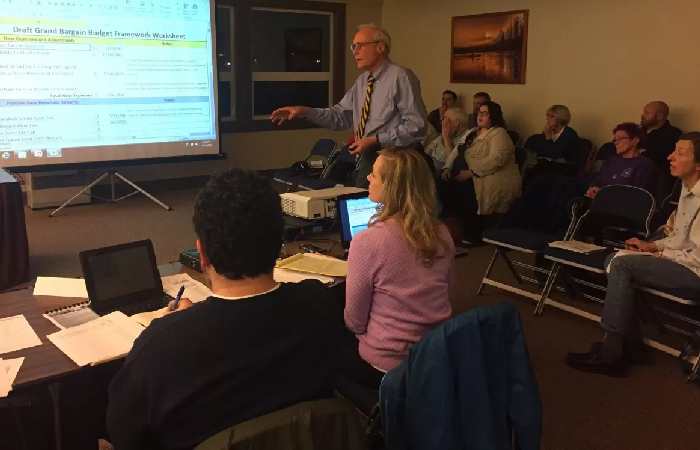
The reform process has encouraged governments, NGOs, and international organizations to work together more closely. Although challenges remain, several practical improvements have already appeared.
1. Assistance has become more flexible
Crises can change quickly. An armed conflict can cause a food crisis, while floods can lead to disease outbreaks. Unfortunately, it was not always easy for the humanitarian system to react promptly to such changes in the past.
The solution provided through the Grand Bargain is flexible funding.
If relief organizations can deploy their funding where the need is greatest, they can save time and resources. They can also respond more quickly when conditions change.
For example, Germany provided the World Food Programme with 30 million euros in spring 2021 for humanitarian support in East Africa. The funding could be used where the need was particularly high. Somalia was one important example because the food situation had become dangerous due to COVID-19, drought, and the locust infestation.
Since 2016, Germany has improved its share of flexible funding from 11% to 37%. The joint target of the Grand Bargain participants is a share of 30%.
This approach can make humanitarian funding more responsive. Instead of keeping money tied to a narrow purpose, organizations can move resources toward urgent needs.
The same principle of flexibility is useful in other areas as well. For example, organizations planning large activities must often adjust quickly when circumstances change. Careful planning an epic corporate party in Australia also shows how preparation and flexibility can help teams respond to unexpected changes.
2. Assistance has become more local
Large international relief organizations are indispensable in the humanitarian framework. Yet relief organizations from crisis regions are often more familiar with the situation. They know what assistance people need on the ground and how to reach communities effectively.
For that reason, Germany is constantly increasing the share of humanitarian funding that goes directly or indirectly to local organizations. As a result, around one-quarter of the budget is now going as directly as possible to local stakeholders.
For example, Germany funded a project run by the Malteser in Syria, which is implemented at the local level. The Malteser has supported the implementation and provided the necessary know-how. As a result, local NGOs launched eight healthcare facilities in northwest Syria.
Local organizations can bring important knowledge about language, culture, geography, and community needs. Their involvement can also help humanitarian programs become more practical and trusted.
This local approach does not mean international organizations are no longer important. Instead, it encourages stronger partnerships between international groups and local organizations.
3. Assistance has become less bureaucratic
In many cases, relief organizations had to write long reports in different formats according to the requirements set by donors. That cost time and money. These resources are needed for important activities such as organizing food distribution, maintaining sanitation facilities, or building accommodation.
That is why Germany developed a simplified and uniform form for reports within the framework of the Grand Bargain. They now use it for all NGO partners. Many other states and UN organizations have adopted it, such as OCHA and UNHCR.
Reducing unnecessary paperwork can give humanitarian workers more time to focus on people affected by crises. It can also make it easier for different organizations to understand reports and compare information.
Clear communication is important outside humanitarian work too. Businesses that manage projects across different teams can benefit from simple systems. For example, organizations adopting hybrid working conditions often need clear processes, shared information, and simple reporting methods.
In this way, better administration can support better results.
4. Assistance focuses on human dignity
Assistance is practical if it addresses people’s needs. In earlier crises and disasters, relief supplies were sometimes provided that could not be used on the ground or were already available in the region.
The Grand Bargain has helped ensure that relief organizations are increasingly distributing monetary assistance in financial form. This approach allows people facing hardship to maintain their dignity and decide what they need, as long as local markets can provide those goods and services.
Cash assistance can also benefit the local economy. When people receive money or vouchers, they can purchase essential goods from nearby businesses. This can support local markets while giving families more choice.
At present, Germany is aiming to provide around 20% of its humanitarian assistance worldwide through cash or vouchers.
The principle of giving people greater choice can also be seen in other forms of organized activity. For example, successful exhibition or trade show management depends on understanding what participants need rather than simply providing a fixed experience.
5. Assistance has become more precise
Before humanitarian assistance can be provided, relief organizations have to establish how many people are affected and what they need. However, the more precisely they can determine these needs, the more efficiently they can provide assistance.
Within the Grand Bargain, Germany was a member of a working group that developed a new method of establishing need, the Joint Intersectoral Analysis Framework (JIAF).
The advantage of the JIAF is that data collection is coordinated among different sectors from the outset. These sectors can include food, accommodation, healthcare, sanitation, and other essential services.
Better data can help organizations avoid duplication and identify gaps in support. It can also help humanitarian teams understand how different problems affect one another.
For instance, a shortage of food can affect health, while poor housing can increase exposure to disease. Looking at these needs together can create a more complete picture of a crisis.
The Importance of Better Coordination
The five examples show that humanitarian reform is not based on one single solution. Instead, the Grand Bargain combines several improvements.
Flexible funding helps organizations react to changing needs. Local partnerships bring stronger knowledge of communities. Simpler reporting reduces administrative pressure. Cash assistance gives people more choice. Finally, better data can improve the accuracy of humanitarian planning.
Coordination is especially important when several organizations work in the same region. Without coordination, some communities may receive too much support while others receive too little.
The same idea applies to organizations and businesses that manage complex projects. Strong coordination helps teams use resources efficiently and avoid unnecessary duplication. Even areas such as business and entrepreneurship depend on effective planning, as seen in discussions about e-commerce tips that can help businesses make money.
Looking at Leadership and Experience
Humanitarian reform also depends on people who understand how organizations, markets, and communities work. Experienced leaders can help teams make decisions during uncertain situations.
Public discussions about successful business leaders, including John Teets’ net worth and career, show how leadership and long-term decision-making can influence organizational outcomes.
Likewise, professionals with experience across different industries can provide useful perspectives on strategy and management. Kurush Mistry is another example of a professional profile that highlights the value of experience and expertise.
While these examples are outside humanitarian assistance, the broader lesson remains relevant. Strong leadership, clear planning, and informed decisions can improve the way organizations respond to complex challenges.
Conclusion
The Grand Bargain has changed the way governments, international organizations, and NGOs approach humanitarian assistance. The reform focuses on making aid more flexible, local, efficient, dignified, and precise.
There is still work to do. Humanitarian crises continue to become complex, and available funding remains limited compared with global needs. However, the progress made since 2016 shows that practical changes are possible when organizations work together.
Flexible funding can help aid reach urgent needs faster. Local organizations can provide valuable knowledge and access. Simpler reporting can reduce unnecessary administrative work. Cash assistance can give people greater control over their choices. Finally, better data can help organizations provide more targeted support.
The future of humanitarian assistance will depend on continued cooperation and a willingness to improve existing systems. By building on these five areas, the Grand Bargain can continue moving toward a humanitarian system that is faster, more effective, and more responsive to the people who need support most.