Last Updated: October 12, 2026
Table of Contents
The Creatives Who Marked the History of Fashion
The history of fashion in France is long, innovative, and influential. French fashion has inspired designers from around the world and become a symbol of luxury, elegance, and authenticity. From royal court clothing to modern haute couture, France has helped shape the way people dress and express themselves.
France is recognised for its art, culture, architecture, gastronomy, and, of course, haute couture. During the twentieth century, Paris became a leading international fashion capital. Designers introduced new silhouettes, fabrics, and techniques that changed women’s clothing and influenced fashion houses across the globe.
French fashion has never been only about appearance. It also reflects social changes, cultural movements, and the changing roles of women. Designers challenged traditional dress codes and introduced clothing that offered greater comfort, freedom, and individuality.
Shortly before the French Revolution, French society was already making its mark on fashion. The royal family and aristocracy influenced clothing trends, while court dressmakers responded to the tastes of influential figures such as Madame de Pompadour and Marie Antoinette.
Over time, fashion moved beyond royal courts and became more accessible to wider audiences. To understand this evolution, it is worth exploring the designers whose creativity helped shape the industry and whose work continues to inspire modern fashion.
This article belongs to the Fashion & Style.
Gabrielle Coco Chanel
Coco Chanel is one of the most influential designers in fashion history. She helped redefine women’s clothing by promoting simple designs, comfortable fabrics, and elegant silhouettes. At a time when many women’s garments were restrictive, Chanel offered a more practical approach to dressing.
Her designs reflected the changing lives of women during the early twentieth century. Clean lines, relaxed shapes, and understated details became important elements of her style. She helped popularise garments that allowed women to move comfortably while maintaining a polished appearance.
In 1954, Chanel returned to fashion after an extended absence and introduced designs that strengthened her reputation. Her tweed suits, structured jackets, and coordinated accessories became signature pieces. These designs demonstrated that elegance did not always require elaborate decoration.
Chanel also made a lasting impact through accessories, jewellery, handbags, and perfume. Chanel No. 5 became one of the most recognised fragrances in the world. Her approach to fashion continues to influence designers who value simplicity, quality, and timeless style.
Her legacy remains visible in modern wardrobes. A well-fitted jacket, a simple dress, or a carefully chosen accessory can reflect the principles of classic Chanel style. Her work proved that practical clothing could also be sophisticated.
Christian Dior
Christian Dior transformed post-war fashion with his famous New Look collection, introduced in 1947. The collection featured rounded shoulders, a defined waist, and full skirts that created a dramatic feminine silhouette.
The designs offered a striking contrast to the fabric restrictions and practical clothing common during the Second World War. Dior’s use of generous fabric and carefully shaped garments brought a sense of luxury back to fashion. His collection attracted international attention and helped restore Paris’s reputation as a centre of haute couture.
Dior’s influence extended beyond dresses and suits. His fashion house developed accessories, perfumes, and other luxury products that complemented its clothing collections. His work demonstrated how a strong design identity could influence an entire luxury brand.
The house of Dior has continued to evolve while preserving its connection to craftsmanship and elegant design. Its collections have dressed celebrities, public figures, and members of royal families. The Lady Dior handbag, named in association with Princess Diana, became one of the fashion house’s best-known accessories.
Dior’s legacy is important because it shows how a single collection can change fashion trends. His designs influenced the proportions, construction, and presentation of women’s clothing for years after their debut.
Jacques Fath
Jacques Fath was another important figure in French haute couture during the post-war period. His fashion house opened in 1937, but it gained greater recognition during the 1940s. Unlike some designers who followed formal training, Fath developed much of his knowledge through self-directed study and practical experience.
His designs were known for their energy, playful details, and imaginative shapes. He experimented with volume, asymmetry, and silhouettes that emphasised the figure. While his work shared some characteristics with Dior’s New Look, Fath maintained his own distinctive approach.
Fath also responded to the changing needs of women. His clothing combined visual appeal with practical considerations, reflecting a period when women were adapting to new routines and social expectations. His designs used shape and proportion to create garments that looked elegant while allowing movement.
Beyond clothing, the fashion house expanded into perfumes, gloves, and accessories. This broader approach helped show how designers could develop a recognisable identity across several product categories.
Jacques Fath’s career highlights the creative diversity of post-war French fashion. His work remains an example of how experimentation can influence design without sacrificing elegance.
Jacques Heim
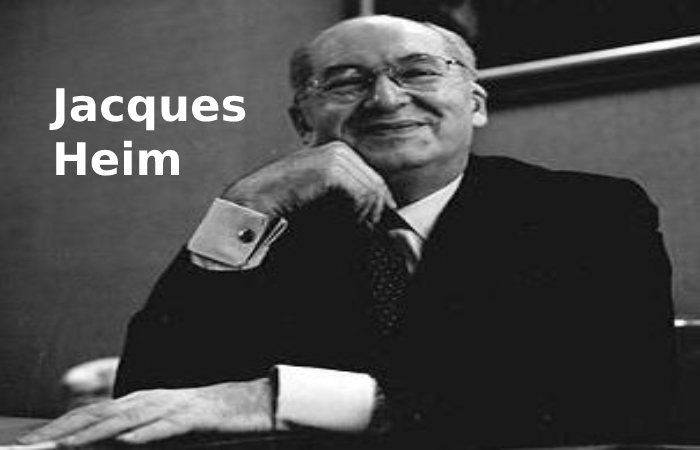
Jacques Heim directed his fashion house from 1930 until his death. He also served as president of the Parisian Couture Chamber of Commerce between 1958 and 1962. His career connected traditional couture craftsmanship with changing ideas about modern clothing.
Heim’s interest in fashion developed through his family’s fur workshop, where he gained experience with materials and garment construction. He later created dresses and coats that reflected French traditions of restraint and elegance.
One of his contributions was experimenting with materials that were not always associated with high fashion. He used fabrics such as cotton and combined them with embroidery and decorative details. This helped demonstrate that refined design depended on more than expensive materials alone.
Heim is also associated with the development of early two-piece swimwear. His designs helped prepare the way for the growing popularity of the bikini during the twentieth century. Swimwear became an important part of the broader shift towards more relaxed clothing and changing attitudes towards the body.
The Jacques Heim fashion house closed during the 1960s, but his work remains part of the story of French couture. His career illustrates how designers can connect traditional craftsmanship with new materials and changing lifestyles.
Marie-Louise Carven
Marie-Louise Carven founded her fashion house in 1945, focusing on women who wanted elegant clothing suited to everyday life. Her designs appealed particularly to petite women, who were often overlooked by other fashion houses.
Carven became known for light fabrics, accessible styles, and clothing that felt less formal than traditional couture. She frequently used materials such as cotton and linen, creating garments that were practical without losing their elegance.
Her approach helped broaden the appeal of French fashion. Rather than focusing only on elaborate evening gowns, Carven designed clothing that women could wear in daily life. This approach reflected the growing demand for versatile garments and anticipated aspects of the ready-to-wear market.
Carven’s work also demonstrated the importance of understanding customers. By designing for a specific audience, she created a clear identity for her fashion house. Her clothes offered an alternative to more dramatic silhouettes and showed that simplicity could be a powerful design choice.
Her contribution remains relevant today. Modern designers continue to explore clothing that balances comfort, fit, and sophistication. Carven’s career is a reminder that successful fashion often begins with understanding how people want to live and dress.
How These Designers Continue to Influence Modern Fashion
The work of Chanel, Dior, Fath, Heim, and Carven continues to influence fashion through silhouettes, fabrics, tailoring, and accessories. Their designs helped establish ideas that remain important today, including timeless elegance, practical clothing, creative experimentation, and attention to detail.
Modern designers often revisit historical collections for inspiration. They may reinterpret a classic jacket, update a traditional skirt, or use older construction techniques in a contemporary garment. These references allow fashion to evolve while maintaining a connection to its past.
For readers interested in the technical side of garment creation, exploring sewing patterns and designers to follow can provide useful inspiration. Patterns help transform creative ideas into wearable clothing and reveal the planning behind a finished design.
Fashion history can also help people make more thoughtful choices about their personal style. Learning why certain silhouettes, fabrics, and colours became popular makes it easier to understand how trends develop and return. For practical ways to apply fashion ideas, explore these styling tips.
Readers who want to learn more about couture can explore what haute couture is, its defining standards, and its lasting influence on the fashion industry.
Conclusion
The creatives who marked the history of French fashion changed more than the way people dressed. They introduced new ideas about comfort, femininity, luxury, craftsmanship, and personal expression.
Coco Chanel made simplicity a lasting symbol of elegance. Christian Dior revived dramatic silhouettes after the war. Jacques Fath brought playful creativity to couture, while Jacques Heim explored materials and swimwear. Marie-Louise Carven made elegant clothing more accessible to women who wanted practical designs.
Their influence continues to appear in modern collections, accessories, and everyday wardrobes. By learning about these designers, fashion enthusiasts can better understand how the industry developed and why their creations still matter. French fashion remains influential because it combines tradition with fresh ideas, proving that great design can stand the test of time.