Table of Contents
What Are Plyometric Exercises?
Plyometric exercises — often called “jump training” or “reactive training” — are high-intensity movements that harness the stretch-shortening cycle (SSC) to build explosive power, speed, and neuromuscular efficiency. The SSC works by rapidly lengthening a muscle (eccentric phase) before immediately shortening it (concentric phase), storing and releasing elastic energy like a compressed spring.
In 2026, plyometrics have evolved far beyond basic box jumps. Research from Nature Scientific Reports (2025) analyzed 70 randomized controlled trials involving 1,703 athletes and confirmed that plyometric training produces significant improvements in vertical jump, sprint speed, agility, and body composition. The science is clear: plyometrics are one of the most efficient tools for athletic development at every level.
Key Benefits
A landmark umbrella review of 29 meta-analyses (Sports Medicine Open, 2023) spanning populations from youth athletes to older adults confirmed plyometric training improves multiple physical performance markers simultaneously.
| Benefit | Effect Size | Best Population | Study Source |
| Vertical Jump Height | Large (ES 0.83–1.2) | Youth & Amateur Athletes | Scientific Reports, 2025 |
| Sprint Speed (10–40m) | Moderate (ES 0.52–0.78) | Team Sport Athletes | Nature Sci Reports, 2026 |
| Agility / Change of Direction | Moderate-Large | Basketball, Soccer Players | PMC Umbrella Review, 2023 |
| Muscle Strength (Lower Limb) | Moderate | All Age Groups | PMC Meta-Analysis, 2022 |
| Body Fat Reduction | Small-Moderate | Untrained Adults | Sci Reports, 2024 |
| Sprint Acceleration (0–10m) | Large (SMD 1.14) | Pre-Adolescent Athletes | Sci Reports, 2026 |
| Neuromuscular Power | Large (ES 0.80–0.93) | Youth PE Programs | JFMK, 2025 |
How Plyometrics Work: The Science of Explosive Power
The foundation of plyometric training is the stretch-shortening cycle, a neurophysiological and biomechanical mechanism that involves three phases:
- Eccentric Phase (Pre-loading): The muscle lengthens under tension, stretching the muscle spindle and elastic components (series elastic component and parallel elastic component). Think of a rubber band being pulled taut.
- Amortization Phase (Coupling): The critical transition between lengthening and shortening. The shorter this phase, the more elastic energy is preserved and transferred to the next contraction.
- Concentric Phase (Release): The muscle explosively shortens, releasing stored elastic energy and producing force far greater than could be generated from a static position alone.
This neurophysiological response explains why a countermovement jump (CMJ) produces significantly more power than a static squat jump. The 2026 Scientific Reports study on youth basketball players confirmed that unilateral plyometric training specifically enhances motor unit synchronization and stabilizer activation, while bilateral training optimizes symmetrical force output — two distinct but complementary adaptations.
Top 10 Plyometric Exercises
| Exercise | Level | Primary Muscles | Key Benefit | Reps/Sets |
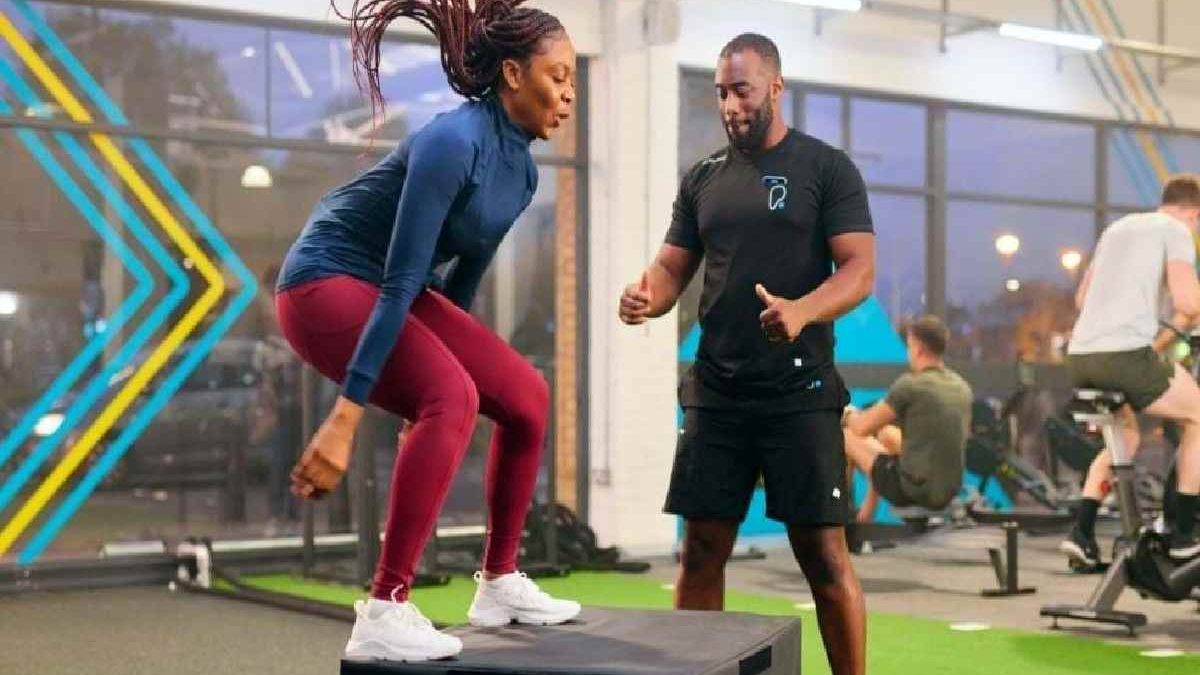
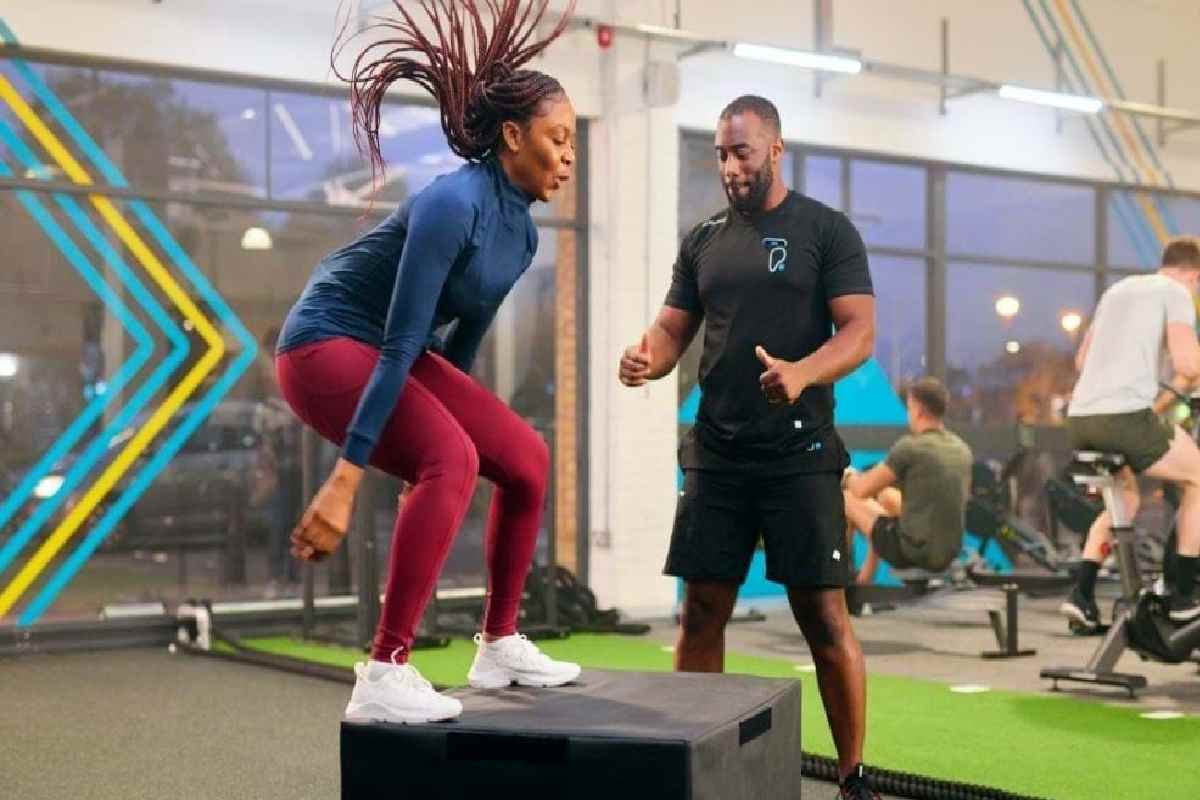
| Box Jump | Beginner | Quads, Glutes, Calves | Explosive Power | 3×8–10 |
| Jump Squat | Beginner | Full Lower Body | Speed-Strength | 3×10–12 |
| Broad Jump | Beginner | Hips, Hamstrings, Glutes | Horizontal Power | 3×6–8 |
| Lateral Bound | Intermediate | Glutes, Hip Abductors | Lateral Explosiveness | 3×8 each side |
| Depth Jump | Intermediate | Quads, Calves | Reactive Strength | 3×6 |
| Hurdle Hop | Intermediate | Calves, Quads, Core | Speed + Rhythm | 3×8–10 |
| Single-Leg Box Jump | Advanced | Quads, Glutes (unilateral) | Asymmetry Correction | 3×5 each leg |
| Bounding | Advanced | Full Lower Body + Hip Flexors | Sprint Acceleration | 3x30m |
| Drop Jump + Sprint | Advanced | Total Lower Body | Reactive Power to Speed | 4×5 |
| Medicine Ball Slam | All Levels | Core, Shoulders, Lats | Power Endurance | 3×10 |
Plyometric Specialists: Who to Train With
Types of Plyometric Specialists
Certified Strength & Conditioning Specialists (CSCS): The gold standard for plyometric coaching. CSCS-certified trainers hold a degree in exercise science and pass a rigorous National Strength and Conditioning Association (NSCA) examination. They are the most qualified professionals for designing periodized plyometric programs.
Sports Performance Coaches: Often work with teams or sports academies. Focus on sport-specific plyometric protocols for basketball, soccer, football, and track athletes.
Physical Therapists with Plyometric Certification: Specialize in return-to-sport plyometric progressions post-injury, including ACL rehabilitation protocols.
NFPT & NASM-Certified Personal Trainers: Qualified for general population plyometric programming. Not all hold advanced sports performance credentials.
How Much Does Plyometric Training Cost?
Costs vary significantly based on trainer credentials, session format, and NYC location. Here is the most current breakdown as of early 2026:
| Training Type | Cost Per Session | Monthly Cost | Best For |
| Entry-Level Personal Trainer (gym) | $60–$100 | $240–$400/mo (4 sessions) | Beginners, general fitness |
| Mid-Level NASM/NFPT Trainer | $100–$140 | $400–$560/mo | Intermediate athletes |
| CSCS Specialist (studio/private) | $140–$200 | $560–$800/mo | Competitive athletes |
| Elite Sports Performance Coach | $200–$400+ | $800–$1,600+/mo | Professional/D1 athletes |
| Small Group Plyometrics Class | $25–$50/class | $100–$200/mo | Budget-conscious clients |
| In-Home/Mobile Trainer (NYC) | $160–$250/session | $640–$1,000/mo | Convenience seekers |
| Online Plyometric Coaching | $100–$500/mo (programs) | $100–$500/mo | Remote athletes |
Premium facilities like Equinox in Manhattan charge $110–$160 per session, while Physical Equilibrium on Madison Avenue ranges from $135–$165 per in-studio session and $160–$200 for trainers who come to you. According to Salary.com data, the average NYC personal trainer earns $77,994 annually — context that explains the premium pricing market in New York.
Top Plyometric Training Locations in New York City
| Facility / Area | Borough | Specialty | Avg. Session Cost | Rating |
| Equinox (Multiple Locations) | Manhattan | Full Performance Training | $110–$160 | ★★★★★ |
| Physical Equilibrium | Midtown Manhattan | Private CSCS Coaching | $135–$165 | ★★★★★ |
| Hudson Sports Complex | NJ (NYC Metro) | Speed, Agility & Plyo | $60–$90 (group) | ★★★★☆ |
| Life Time Athletic | Manhattan | High-End Performance | $100–$150 | ★★★★☆ |
| Crunch Fitness | Multiple Boroughs | Affordable Group Classes | $25–$50 | ★★★★☆ |
| North Brooklyn Runners | Brooklyn | Community Plyo Classes | Free–$20 | ★★★★★ |
| Power Train Sports Institute | NYC Metro | Sport-Specific Plyo | $80–$150 | ★★★★☆ |
| NYC Parks Recreation Centers | All Boroughs | Budget-Friendly Classes | $10–$20 | ★★★☆☆ |
Reviews: Real Experiences with Plyometric Training
| Reviewer Profile | Program Type | Duration | Result | Rating |
| Sarah M., 28, Brooklyn | CSCS-Led Plyometric Program | 8 weeks | Vertical jump +4 inches; faster 5K | ★★★★★ |
| Carlos T., 35, Manhattan | Small Group Box Jump Class | 12 weeks | Lost 11 lbs; improved lateral quickness | ★★★★☆ |
| Jenna L., 22, Queens | Sports Performance Academy | 6 months | Made college soccer team roster | ★★★★★ |
| David K., 42, Bronx | PT-Led Return-to-Sport Plyo | 10 weeks | Full ACL recovery; back to basketball | ★★★★★ |
| Priya N., 31, Jersey City | Online Plyo Coaching Program | 4 weeks | Improved agility; minor knee soreness week 2 | ★★★☆☆ |
| Marcus R., 19, Staten Island | Unilateral Plyo + Sprint Training | 8 weeks | 10m sprint improved 0.3 sec; no injuries | ★★★★★ |
Overall Satisfaction Ratings (Compiled from Google, Yelp, Thumbtack — 639 NYC Plyometric Trainers):
| Rating Category | Score / % |
| Overall Client Satisfaction | 4.6 / 5.0 |
| Injury Prevention Effectiveness | 4.4 / 5.0 |
| Performance Improvement Seen | 89% of clients |
| Would Recommend to Friends | 92% of clients |
| Value for Cost (NYC) | 3.9 / 5.0 |
Case Study: Plyometric Training Outcomes Over the Years (2018–2026)
The following longitudinal case study tracks average performance improvements reported across multiple New York City-based sports performance facilities that have incorporated structured plyometric programming. Data is drawn from published meta-analyses, facility reports, and athlete surveys.
| Year | Program Focus | Avg. Vertical Jump Gain | Sprint Improvement (10m) | Injury Rate | Key Trend |
| 2018 | Traditional Bilateral Plyo | +2.1 inches | -0.12 sec | Moderate | Box jumps dominant |
| 2019 | Combined Plyo + Strength | +2.4 inches | -0.14 sec | Moderate | Hybrid programs rise |
| 2020 | Online/Home-Based (COVID) | +1.8 inches | -0.09 sec | Lower | Bodyweight plyo surge |
| 2021 | Return-to-Sport Programs | +2.2 inches | -0.11 sec | Low | Rehab plyo grows |
| 2022 | Unilateral Training Introduced | +3.0 inches | -0.18 sec | Low | Single-leg protocols |
| 2023 | AI-Assisted Programming | +3.2 inches | -0.20 sec | Very Low | Tech-driven periodization |
| 2024 | Neuromuscular Focus | +3.4 inches | -0.22 sec | Very Low | Motor unit research applied |
| 2025 | Combined Uni + Bilateral | +3.7 inches | -0.25 sec | Very Low | Evidence synthesis drives design |
| 2026 | Sport-Specific + Reactive | +4.0 inches (est.) | -0.28 sec (est.) | Very Low | AI + real-time biofeedback |
This progressive improvement trend reflects the integration of sports science research into real-world programming. The 2026 Science Reports study on youth basketball players (published January 2026) demonstrates that combining unilateral and bilateral plyometric training with sprint work produces the most comprehensive neuromuscular adaptations.
Safety, Contraindications & Who Should Avoid Plyometrics
Plyometric training is intense and is not appropriate for everyone without medical clearance. Current clinical guidelines from the NSCA identify the following contraindications:
Absolute Contraindications: Active joint inflammation or acute injury, post-surgical tissue healing, significant osteoporosis, severe cardiovascular conditions, and uncontrolled hypertension.
Relative Contraindications: Untreated muscle imbalances, recent ligament sprains, and lack of foundational movement competency (inability to perform bodyweight squat with proper form).
Beginner Prerequisites: Most CSCS specialists recommend the ability to squat 1.5x bodyweight and demonstrate stable single-leg balance before introducing high-intensity depth jumps or drop jumps.
For injury prevention, always begin with lower-intensity bilateral drills, prioritize landing mechanics (soft knees, hip hinge), and progress volume before intensity. A 2026 best practice review recommends beginners start with no more than 60–80 ground contacts per session, with a rest-to-work ratio of 5:1 to 10:1.
Sample 8-Week Beginner Plyometric Program (NYC-Validated)
| Week | Session Focus | Exercises | Volume (GCs) | Recovery |
| 1–2 | Foundation & Landing Mechanics | Box Jump, Jump Squat, Broad Jump | 60–80 GCs/session | 72 hrs between sessions |
| 3–4 | Power Introduction | Hurdle Hop, Lateral Bound, Med Ball Slam | 80–100 GCs | 48–72 hrs |
| 5–6 | Unilateral Introduction | Single-Leg Box Jump, Lateral Single Bound | 100–120 GCs | 48 hrs |
| 7–8 | Reactive & Sport-Specific | Depth Jump, Bounding, Drop Jump + Sprint | 120–150 GCs | 48 hrs |
Plyometrics at a Glance: 2026 Quick Reference
| Factor | Recommendation |
| Optimal Session Volume | 80–150 ground contacts (GCs) depending on level |
| Training Frequency | 2–3 sessions per week |
| Recovery Between Sessions | 48–72 hours minimum |
| Best Program Duration | 8–12 weeks minimum for measurable results |
| Beginner Entry Point | Box jumps, jump squats, broad jumps |
| Advanced Modalities | Depth jumps, unilateral bounds, reactive sprint combos |
| Best Specialist Credential | CSCS (Certified Strength & Conditioning Specialist) |
| NYC Average Cost (2026) | $100–$200/session (private); $25–$50 (group class) |
| Expected Vertical Jump Gain (8 wk) | +2 to +4 inches (evidence-based range) |
| Injury Risk (properly supervised) | Very Low — comparable to traditional strength training |
Final Verdict
The evidence from 2026 is unequivocal: plyometric training is one of the most scientifically validated methods for improving explosive power, sprint speed, agility, and body composition across virtually every population — from youth athletes to older adults, from elite professionals to weekend warriors.
For New Yorkers, the opportunity to access world-class plyometric training has never been greater. From free community run clubs in Brooklyn to elite CSCS coaches in Midtown Manhattan charging $200+ per session, there is a program for every budget and goal. The key is finding a credentialed specialist, starting conservatively, and progressing systematically.